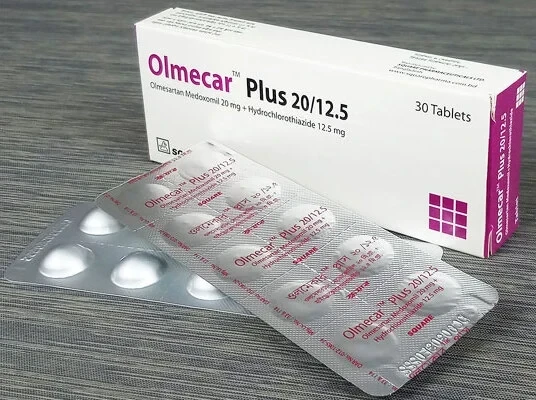
Olmecar Plus Tablet, Olmesartan Medoxomil + Hydrochlorothiazide 20 mg+12.5 mg
Inhouse product
-
 ৳11.40
৳12.00 -
৳42.75
৳45.00 -
৳16.63
৳17.50 -
৳2.14
৳2.25 -
৳9.50
৳10.00


Reviews & Ratings
Indications
Olmecar Plus tablet is
indicated for the treatment of hypertension.
* রেজিস্টার্ড চিকিৎসকের পরামর্শ মোতাবেক ঔষধ সেবন করুন'
Pharmacology
Angiotensin-II formed
from angiotensin-I in a reaction catalyzed by angiotensin-converting enzyme
(ACE), is a potent vasoconstrictor, the primary vasoactive hormone of the
renin-angiotensin system and an important component in the pathophysiology of
hypertension. It also stimulates aldosterone secretion by the adrenal cortex.
Olmesartan blocks the vasoconstrictor and aldosterone-secreting effects of
angiotensin-II by selectively blocking the binding of angiotensin-II to the AT
1 receptor found in many tissues (e.g. vascular smooth muscle, adrenal gland).
In-vitro-binding studies indicate that Olmesartan is a reversible &
competitive inhibitor of AT 1 receptor. Olmesartan does not inhibit ACE
(kinase-I, the enzyme that converts angiotensin-I to angiotensin-II and
degrades bradykinin).
Hydrochlorothiazide is a thiazide diuretic. Thiazides affect the renal tubular
mechanisms of electrolyte reabsorption, directly increasing the excretion of
Sodium and Chloride in approximately equivalent amounts. Indirectly, the
diuretic action of Hydrochlorothiazide reduces plasma volume with consequent increases
in plasma renin activity, increases Aldosterone secretion & urinary
Potassium loss and decreases serum Potassium. The renin-aldosterone link is
mediated by angiotensin-II. So, co-administration of an angiotensin-II receptor
antagonist tends to reverse the potassium loss associated with these diuretics.
Dosage & Administration
Hypertension: The usual starting dose is 20/12.5 mg one
tablet once daily. Dosing should be individualized. Depending on the blood
pressure response, the dose may be titrated at intervals of 2-4 weeks to two
tablets 40/25 once daily.
* রেজিস্টার্ড চিকিৎসকের পরামর্শ মোতাবেক ঔষধ সেবন করুন'
Interaction
Olmesartan: No significant drug interactions were
reported in studies in which Olmesartan Medoxomil was co-administered with
hydrochlorothiazide, digoxin or warfarin in healthy volunteers. Olmesartan
Medoxomil is not metabolized by the cytochrome P450 system and has no effects on
P450 enzymes; thus, interactions with drugs that inhibit, induce or are
metabolized by those enzymes are not expected.
Hydrochlorothiazide: When administered concurrently, the
following drugs may interact with Thiazide diuretics:
- Alcohol, Barbiturates or
Narcotics: Potentiation of orthostatic hypotension may occur.
- Antidiabetic drugs (oral agents
and Insulin): Dosage adjustment of the antidiabetic drug may be required.
- Other antihypertensive drugs:
Additive effect.
- Corticosteroids, ACTH.
- Lithium.
Contraindications
The combination of
Olmesartan and Hydrochlorothiazide is contraindicated in patients who are
hypersensitive to any component of this product. Because of the
Hydrochlorothiazide component, this product is contraindicated in patients with
anuria or hypersensitivity to other sulfonamide-derived drugs.
Side Effects
The common
side-effects are nausea, headache, dizziness, hyperuricemia, upper respiratory
tract infection and urinary tract infection. Other adverse effects are chest
pain, back pain, peripheral edema, abdominal pain, dyspepsia, gastroenteritis,
diarrhea.
Pregnancy & Lactation
Safety and
effectiveness in nursing mother & pregnancy have not been established. The
drug should be discontinued during these conditions.
Precautions & Warnings
- Periodic determination of serum
electrolytes should be performed at appropriate intervals to detect
possible electrolyte imbalance like hypokalemia, hyponatremia and
hypochloremic alkalosis.
- Hyperuricemia may occur in
certain patients receiving thiazide therapy.
- Impaired renal function.
Use in Special Populations
Renal Impairment
Patients: The usual regimens
of therapy with this may be followed provided the patient's creatinine
clearance is >30 ml/min. In patients with more severe renal impairment, loop
diuretics are preferred to thiazides. So, Olmecar Plus is not recommended.
Hepatic Impairment
Patients: No dosage adjustment
is necessary with hepatic impairment.
Paediatric use: Safety and effectiveness in paediatric
patients have not been established.
Geriatric use: Clinical studies of Olmesartan and
Hydrochlorothiazide combination did not include sufficient numbers of subjects
aged 65 and over to determine whether they respond differently from younger
subjects. In general, dose selection for an elderly patient should be cautious.
Overdose Effects
Olmesartan: Limited data are available in regard to
overdosage in humans. The most likely manifestation of overdosage would be
hypotension and tachycardia. Supportive treatment should be instituted.
Hydrochlorothiazide: The most common signs and symptoms observed
are those caused by electrolyte depletion (hypokalemia, hypochloremia, and
dehydration) resulting from excessive diuresis. If digitalis has also been
administered, hypokalemia may accentuate cardiac arrhythmias.
Therapeutic Class
Combined
antihypertensive preparations
Storage Conditions
Store in a cool and
dry place, protect from light and moisture. Keep out of the reach of children.
Frequently Bought Products


Braintel Syrup 100 ml bottle, Brahmi Rasayan


Oxat Tablet, Paroxetine Hydrochloride 20 mg

Nebipres Tablet, Nebivolol Hydrochloride 5 mg
Product Queries (0)
Login Or Registerto submit your questions to seller
Other Questions
No none asked to seller yet
-
৳11.40
৳12.00 -
৳42.75
৳45.00 -
৳16.63
৳17.50 -
৳2.14
৳2.25 -
৳9.50
৳10.00